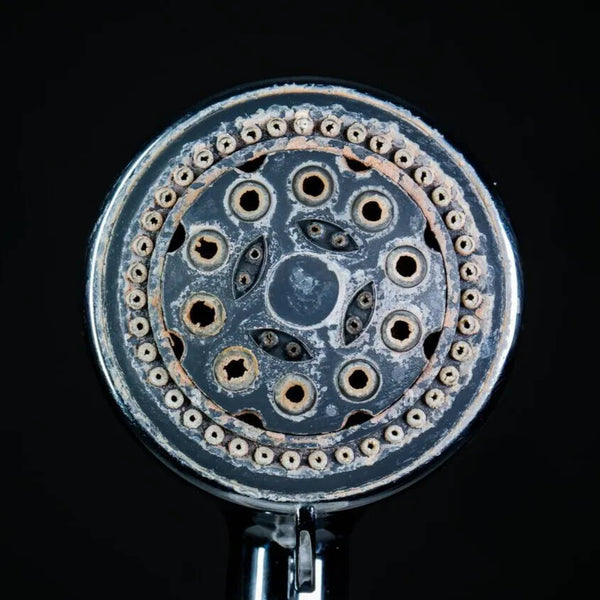
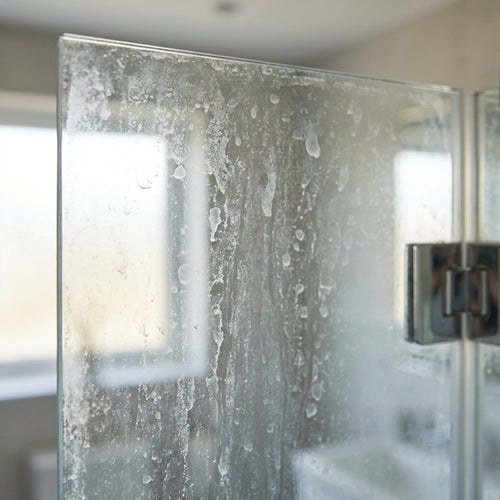
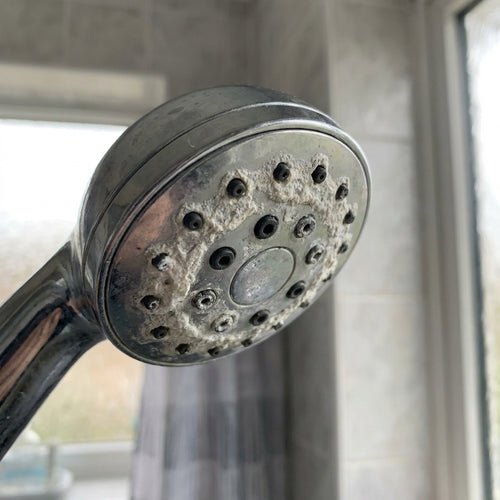
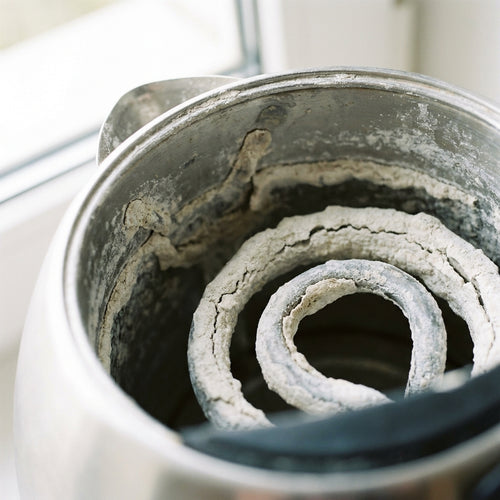
Das Spannungsgefühl der Haut nach dem Duschen, Kalk auf dem Glas, dieser Chlorgeruch im warmen Bad - vieles davon liegt am Wasser, nicht an deiner Pflegeroutine.
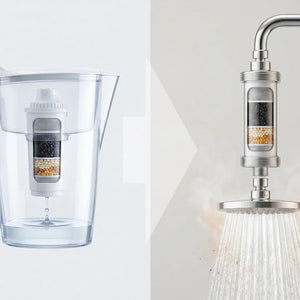
Kurze Antwort: Ein Duschfilter leitet das Wasser durch ein chemisches oder elektrochemisches Medium - Vitamin C, KDF-55, Calciumsulfit oder Aktivkohle -, um Chlor und seine Nebenprodukte zu reduzieren, bevor das Wasser deine Haut und Haare erreicht. Die Technologien unterscheiden sich vor allem in zwei Dingen: wie schnell sie in dem Sekundenbruchteil reagieren, den das Wasser im Filter verbringt, und ob sie bei 38-42°C weiterarbeiten. Die meisten Medien wurden für langsamen, kühlen Durchfluss im ganzen Haus entwickelt. Eine Dusche ist heiß und schnell - genau da zeigen sich die Unterschiede.
Zwei Dinge im normalen Leitungswasser erreichen deine Haut jeden Tag: Chlor, das die Wasserversorger zusetzen, um das Wasser sicher zu halten, und gelöste Härtemineralien (vor allem Calcium und Magnesium) in Regionen mit hartem Wasser. Peer-reviewte Forschung hat sich mit beidem beschäftigt. Studien bringen höhere Wasserhärte im Haushalt und Chlorexposition mit Veränderungen der Hautbarriere in Verbindung[1][2][3], und hartes Wasser wurde im Zusammenhang mit der Festigkeit der Haarfaser untersucht[4][5].
Was Menschen meist bemerken, ist einfacher: Haut, die sich nach dem Duschen spannt oder trocken anfühlt, Haare, die stumpf wirken, und Kalk auf Glas und Fliesen. Ein Duschfilter setzt an der Wasserseite an - er verändert deine Haut oder Haare nicht direkt, er verändert das, was auf ihnen landet.