Why It Works — Proof, Not Promises | PICKI NIKI

PICKI NIKI Vitamin C shower filter — engineered for real shower conditions
PROOF, NOT PROMISES

Proof, Not Promises.

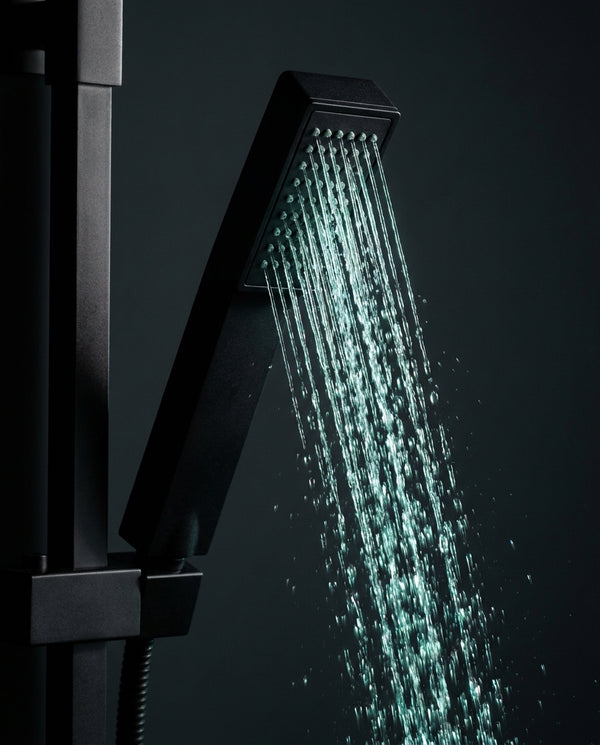
Engineered for the real conditions of a shower - hot & hard water, fast flow, chlorine. Tested in independent Korean laboratories.

Explore the System ↓
+1,000 five-star reviews

What's in your shower water

Chlorine

Can disrupt the skin barrier and dry out hair.

Hard-water minerals

Calcium and magnesium leave residue on skin and hair, affecting how they feel and look.

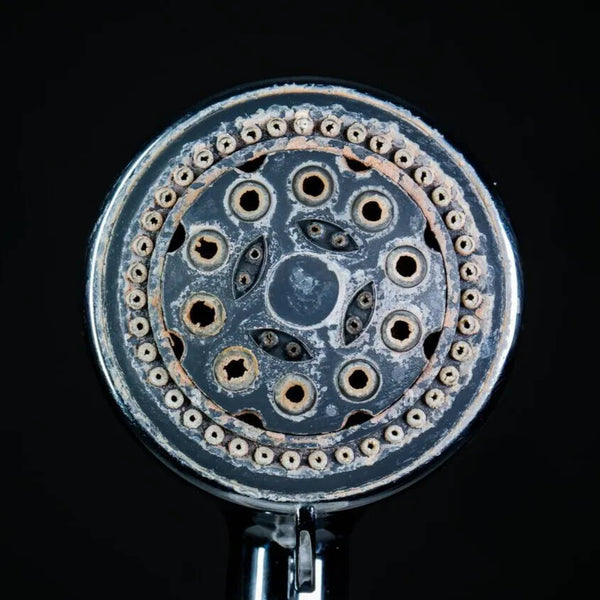
Rust and impurities

From old pipes - can contribute to irritation and dullness. Often invisible, but they reach your skin and hair every day.

Most filters only solve part of this

Many focus on one thing - usually chlorine. Real shower water carries several factors at once, so partial filtration gives partial results.

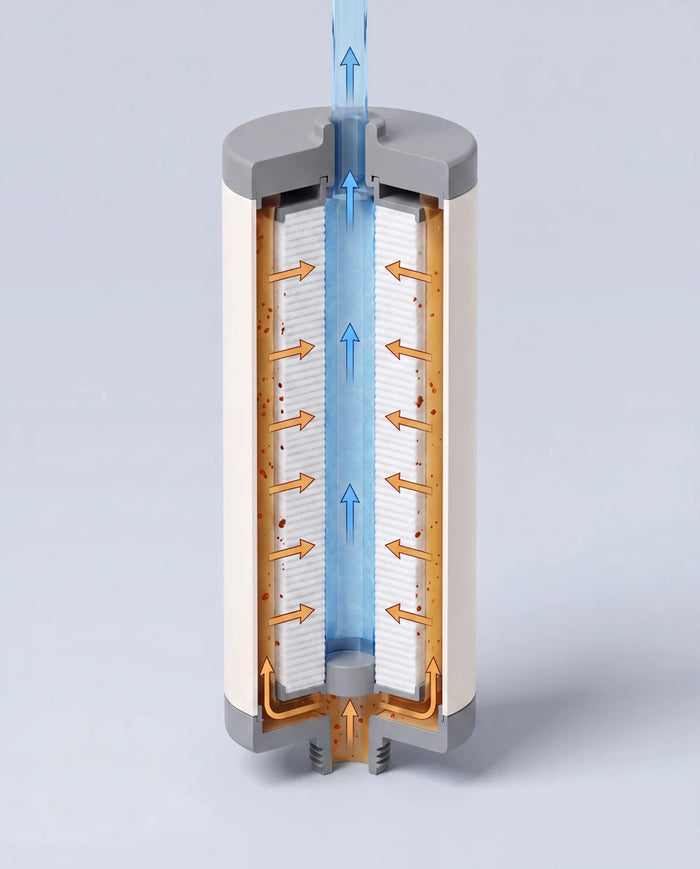
Sediment filter removes rust and dirt from shower water
Not adapted from drinking-water systems

Shower filtration isn't drinking-water filtration

Most filtration systems were originally designed for drinking water - slow flow, cool temperature, long contact time. A shower is the opposite: fast, hot, continuous, high volume. What works for slow, cold drinking water doesn't behave the same way in a fast, hot shower.

That's why PICKI NIKI is designed specifically for real shower conditions.

The dual filtration system

Two stages, each with a specific role. Designed to be used together - not separately.

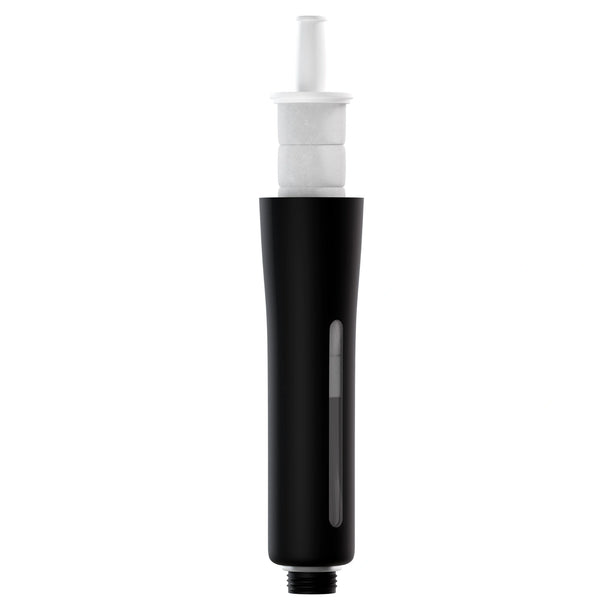
Step 1 · In the handle

Sediment filtration

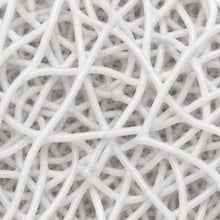
Removes rust, particles and pipe debris, regardless of flow rate or temperature. Hot water accelerates the release of rust and debris from old pipes - 5μm melt-blown cartridge in sealed full-flow housing, 100% pass-through, no bypass.

Sediment filtration
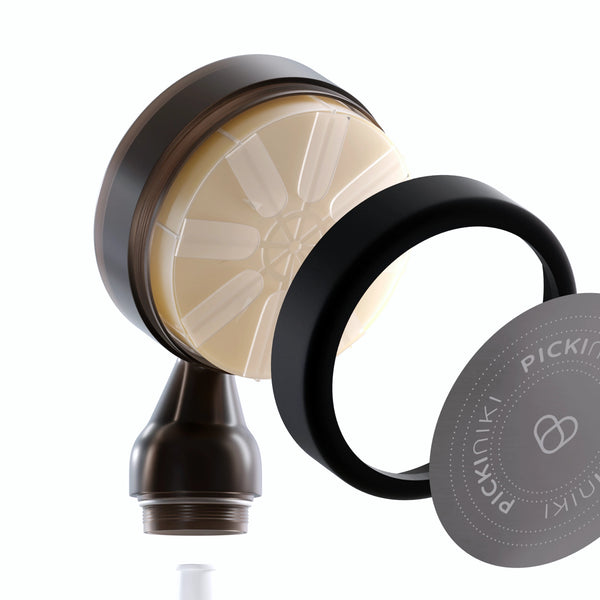
Step 2 · In the head

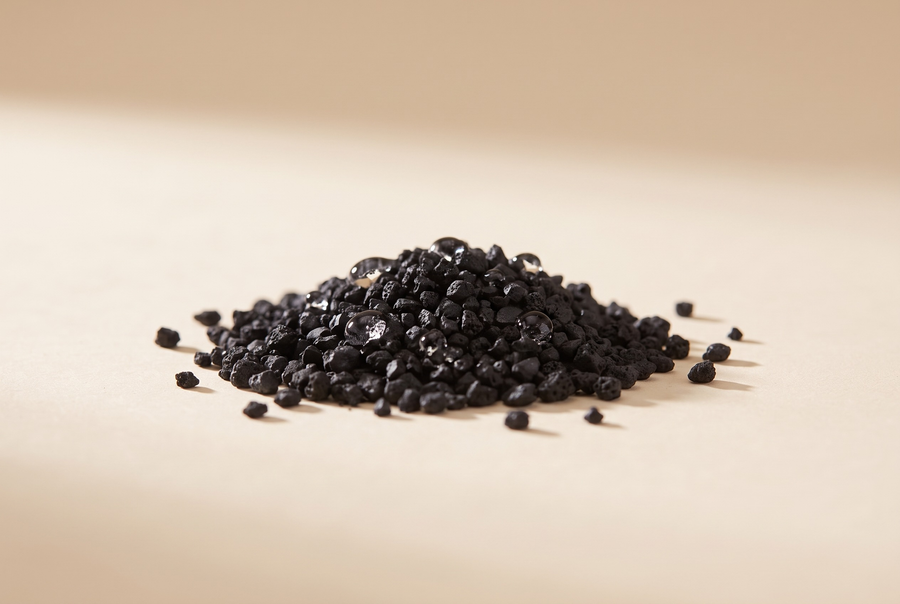
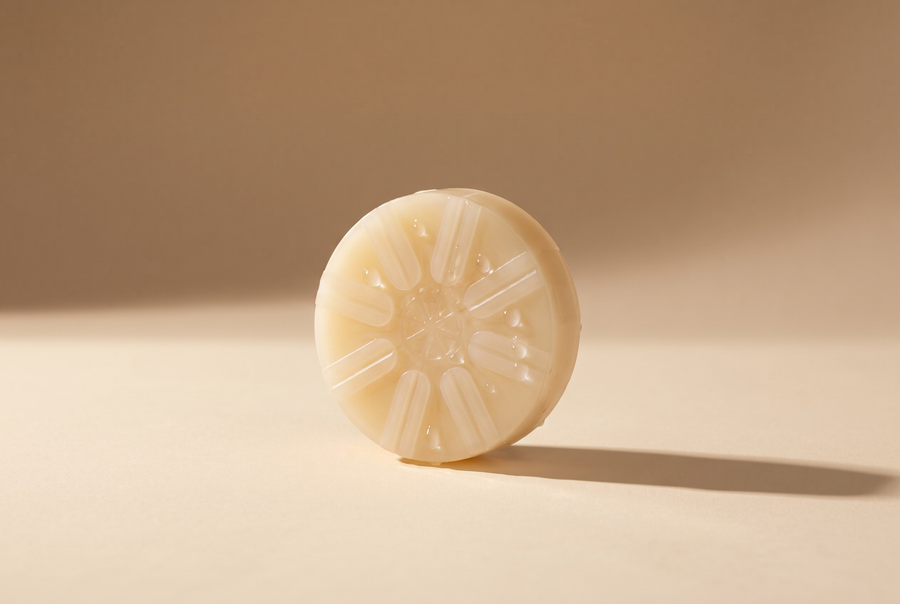
Vitamin C filtration

A high-concentration Vitamin C formula that neutralises chlorine on contact and forms soluble complexes with calcium and magnesium minerals. Reacts directly with chlorine on contact - even in fast-flowing water. More active in warm water - suited to hot showers.

Vitamin C filtration
Sequence matters

Why both steps matter

Chlorine and physical impurities need different filtration approaches; using only one leaves part of the problem unresolved.

  • Step 1 removes physical particles - regardless of flow
  • Step 2 neutralises chlorine through established chemistry

Designed to be used together - not separately.

More than just filtration

Stronger pressure feel

200 micro-hole spray plate engineered for consistent, satisfying flow.

More efficient water use

Up to 35% less water - tested at 8 L/min vs 12-15 L/min unrestricted shower heads.

Aromatherapy options

Tea Tree, Baby Powder, or unscented - your daily ritual reset.

What you may notice

Four everyday changes after switching to filtered shower water.

What you may notice
Less tightness after showering

Skin feels softer and less dry.

Hair feels softer and lighter

Easier to manage, less mineral residue.

Less visible hard-water residue

Fewer mineral marks on skin and hair.

More effective rinsing

Strong, consistent flow, gentle on skin.

The chemistry

The science

Chlorine neutralisation: C₆H₈O₆ + HOCl → C₆H₆O₆ + HCl + H₂O. Ascorbic acid (Vitamin C) reacts with free chlorine, converting it into harmless by-products - the same established principle used in pool-water treatment.

Chemistry of chlorine neutralisation
  • Chlorine on contactReacts directly with free chlorine - verified non-detectable at outlet in KEWI lab testing⁵.
  • Mineral interactionForms soluble ascorbate complexes with calcium + magnesium (point-of-use treatment).
  • pH balanceReduces alkaline shower water toward skin's natural pH 5.5 - input pH 10.0 reduced to 7.38 at KTR⁴.

⁴ KTR pH-stability test (2023). ⁵ KEWI chlorine test (2020).

Mechanism difference

Carbon vs Vitamin C - the mechanism difference

Carbon and KDF filters work by physical adsorption - water has to stay in contact long enough. A shower gives them almost no time. Vitamin C reacts directly with chlorine on contact, and faster in warm water.

  PICKI NIKI (Vitamin C) PICKI NIKI1 cartridge ~ 250 lemons of Vitamin C Carbon filters Adsorbent media KDF filters Zinc/copper redox Mineral / Ceramic Beads No published mechanism
How it removes chlorineReacts on contact (redox)Physical adsorption - needs contact timeRedox media - needs contact timeNo published chlorine mechanism
In a real shower (fast flow, short contact, hot water)Reacts on contact, faster in warm waterDesigned for slow, cool drinking water; capacity consumed as it works~Manufacturer data: ~90% removal at shower flow vs >98% at slow flowOften rebranded under proprietary names
Contact time needed~0.1 secAt full shower flow25-40 secEBCT required (WQA standard)SecondsAt low flow onlyn/a
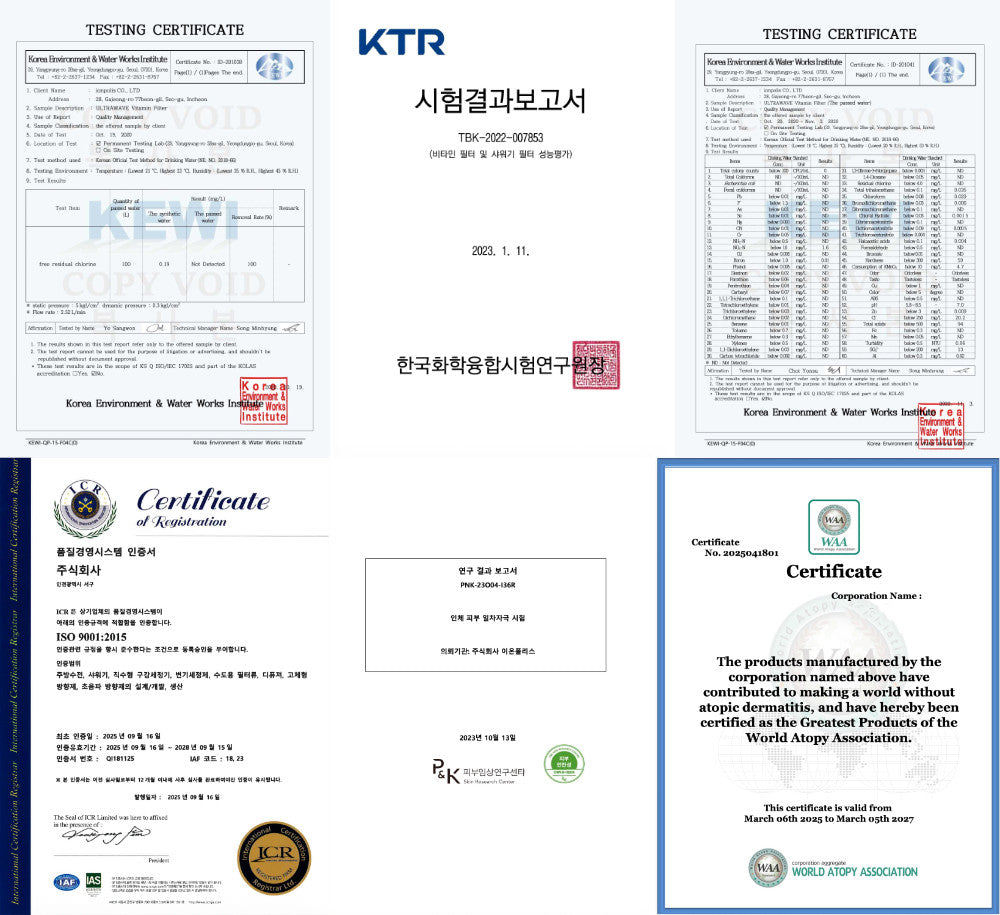
³ KEWI lab test (2020): 0.19 mg/L free chlorine reduced to non-detectable at 2.52 L/min, 22°C.
Mechanism difference

Carbon and biofilm

Activated-carbon filters remove chlorine by trapping it in a porous bed. That same bed - porous, nutrient-rich, and stripped of chlorine's antibacterial effect - can become more susceptible to biofilm formation over time. Peer-reviewed studies of carbon point-of-use filters have measured heterotrophic bacteria rising to many times the incoming level as the filter ages⁷ ⁸.

Carbon biofilm illustration
  • Vitamin C is consumed, not storedIt reacts with chlorine and dissolves away; when spent, only an empty cartridge remains. No porous, nutrient-loaded bed for bacteria to colonise.
  • The Vitamin C stage sits lastOnce depleted, water returns to normal tap-water conditions - still chlorinated, still disinfected, never worse. A spent carbon bed cannot always say the same.
⁷ Carbon biofilm peer-reviewed: Environmental Science: Water Research & Technology (RSC, 2017). ⁸ Carbon bacterial growth: PubMed 6784673.

Sediment stage

Particles - the sediment stage

Many shower filters have no dedicated stage for the rust, grit and pipe debris that hot water pulls out of old plumbing. PICKI NIKI's Step 1 sediment filter is built for exactly this. Because it's physical capture - not a reaction or timed adsorption - it works regardless of flow rate or temperature.

Feature PICKI NIKI Carbon / KDF filters
Dedicated sediment stage -
Particle capture (5μm melt-blown, all water forced through) -

In short

Captures particles

From plumbing - rust, grit, pipe debris.

Neutralises chlorine

In shower water, on contact.

Reduces mineral residue

From hard water (soluble complexes).

Strong consistent flow

With reduced water use.

Testing & Certifications

Dermatologically tested

P&K Skin Clinical Research Centre (n=30) - non-irritant⁶.

Chlorine + 60-parameter water quality

Tested at KEWI³.

pH stability

KTR across full shower flow rates².

Atopy-friendly certified

World Atopy Association (2025-2027)⁷.

High-concentration Vitamin C formula

Pure, uncoloured, food-grade ascorbic acid formulation.

RoHS materials test

Lead, mercury, cadmium and hexavalent chromium below limits⁸.

ISO manufacturing standards

ISO 9001 / 14001 / 37001 / 37301 / 45001⁹.

EVIDENCE & SOURCES

References

Sources for individual claims, marked with footnote numbers. Peer-reviewed papers are cited in support of underlying mechanisms, not as proof of product efficacy.

  1. Drinking-water filter context. Most domestic filters originally designed for slow flow, cool temperature, long... peer reviewed

    Drinking-water filter context. Most domestic filters originally designed for slow flow, cool temperature, long contact time. Sources: Wu et al., npj Clean Water (2021); WC&P Online (industry) - NSF/ANSI 42 carbon cartridge EBCT.

    peer reviewed
  2. Activated carbon - mechanism + contact time. Wu et al., npj Clean Water (2021);... peer reviewed

    Activated carbon - mechanism + contact time. Wu et al., npj Clean Water (2021); WC&P Online (industry) - NSF/ANSI 42 carbon cartridge EBCT approx 0.14 min in test protocol; Aqueous Chlorine/Activated Carbon Interactions, Journal of Environmental Engineering 110(3), 1984 - chlorine reduction on the carbon surface significantly decreases the carbon's adsorption capacity.

    peer reviewed
  3. KDF data. Kymera International, KDF-55/85 Process Media Technical Bulletin (2023) - approx 90% in... peer reviewed

    KDF data. Kymera International, KDF-55/85 Process Media Technical Bulletin (2023) - approx 90% in shower water filters due to high flow rate vs more than 98% in slow home systems.

    peer reviewed
  4. KTR pH testing. Korea Testing & Research Institute contract test, flow 7.5 L/min, 2023.... peer reviewed

    KTR pH testing. Korea Testing & Research Institute contract test, flow 7.5 L/min, 2023. Input pH 10.0 reduced to 7.38; input pH 9.0 reduced to 6.45. (Claims library: C220)

    peer reviewed
  5. KEWI chlorine testing. Korea Environment and Water Works Institute, 2020. 0.19 mg/L free chlorine... peer reviewed

    KEWI chlorine testing. Korea Environment and Water Works Institute, 2020. 0.19 mg/L free chlorine reduced to non-detectable at 2.52 L/min, 22°C. (Claims library: C035)

    peer reviewed
  6. Carbon biofilm (peer-reviewed). Environmental Science: Water Research & Technology (RSC, 2017) - activated-carbon-block POU... peer reviewed

    Carbon biofilm (peer-reviewed). Environmental Science: Water Research & Technology (RSC, 2017) - activated-carbon-block POU filters; effluent heterotrophic plate counts plateaued up to approx 100x influent counts after approx 85% of rated volume. Drinking-water POU filters, general mechanism.

    peer reviewed
  7. Carbon bacterial growth (peer-reviewed). PubMed 6784673 - three activated-carbon POU filters removed free chlorine... peer reviewed

    Carbon bacterial growth (peer-reviewed). PubMed 6784673 - three activated-carbon POU filters removed free chlorine below detection, but standard plate-count bacteria in effluent rose steadily and stayed elevated over 8 weeks.

    peer reviewed
  8. Dermatological test. P&K Skin Clinical Research Centre, Seoul, n=30, 24h patch test, supervised by... peer reviewed

    Dermatological test. P&K Skin Clinical Research Centre, Seoul, n=30, 24h patch test, supervised by dermatology professor at Chung-Ang University Medical Center, 2023. Skin Irritation Index 0.03 (non-irritant). (Claims library: C072)

    peer reviewed
  9. Atopy certification. World Atopy Association, 2025-2027. (Claims library: C221) peer reviewed

    Atopy certification. World Atopy Association, 2025-2027. (Claims library: C221)

    peer reviewed
  10. RoHS materials test. Filter-material (not water) test confirming lead, mercury, cadmium and hexavalent chromium... peer reviewed

    RoHS materials test. Filter-material (not water) test confirming lead, mercury, cadmium and hexavalent chromium below RoHS limits. A materials-safety result, NOT a claim that the filter removes heavy metals from water.

    peer reviewed
  11. ISO manufacturing. ISO 9001:2015 (quality), 14001:2015 (environment), 37001 (anti-bribery), 37301 (compliance), 45001 (occupational H&S)... peer reviewed

    ISO manufacturing. ISO 9001:2015 (quality), 14001:2015 (environment), 37001 (anti-bribery), 37301 (compliance), 45001 (occupational H&S) - issued by ICR Ltd., valid through 2028-09-15. (Claims library: C222)

    peer reviewed
Lab tests at Korean facilities (KEWI, KTR, P&K) are not KOLAS / ISO 17025 accredited. Independent UK UKAS-accredited testing is in progress, with results expected mid-2026. Full certification numbers and test report IDs are available on request.